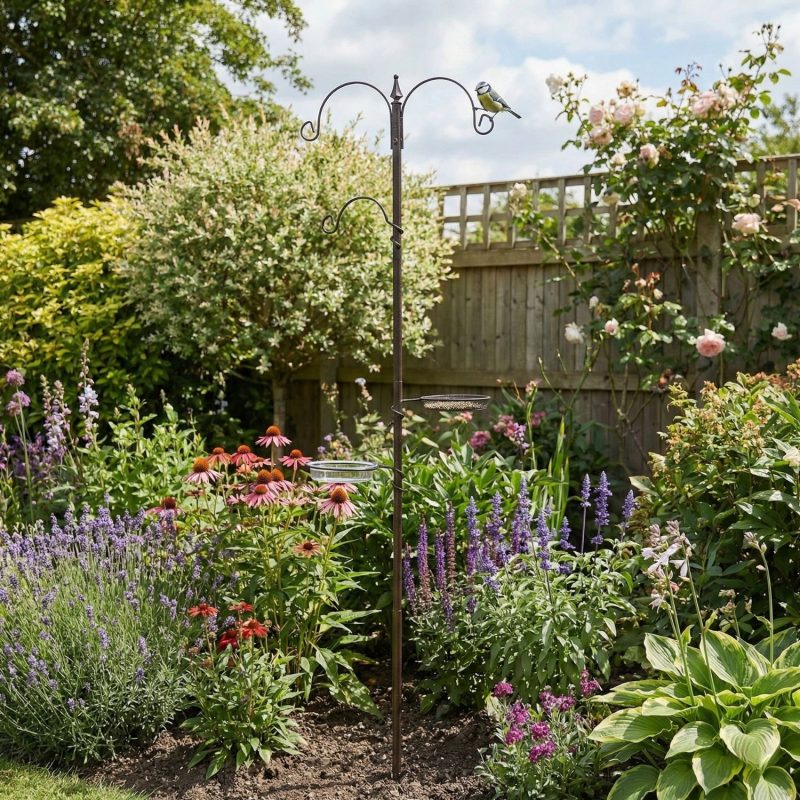
A bird feeding station can transform your garden into a haven for wildlife, providing birds with a reliable source of food throughout the year. However, where you position your feeding station can have a big impact on how many birds visit and how safe they feel while feeding.
One of the best places to position a bird feeding station is near natural cover such as trees, hedges or shrubs. Birds prefer feeding in areas where they can quickly retreat if they sense danger. Having nearby shelter gives them confidence to visit more regularly while also providing protection from harsh weather conditions.
It’s important to keep feeding stations away from places where predators, particularly cats, can easily hide and launch an attack. Position feeders at a reasonable distance from fences, dense bushes and other areas that could provide cover for stalking predators. This gives birds a better chance of spotting danger and escaping safely.
Visibility is another key consideration. Place your feeding station somewhere that is easy for birds to see from the air. An open location can help attract a wider variety of species, especially those passing overhead in search of food. At the same time, maintaining access to nearby shelter creates the ideal balance between visibility and safety.
When choosing a location, consider the changing seasons. During winter, a spot that receives some sunlight can help keep feeders accessible and encourage birds to visit. In summer, partial shade can help prevent food from spoiling too quickly and provide a more comfortable feeding environment.
Regular maintenance is just as important as good placement. Bird feeders should be cleaned frequently to prevent the spread of disease and to keep food fresh. Water containers should also be emptied and refilled regularly, particularly during warm weather.
A well-positioned bird feeding station can attract a variety of garden birds while supporting local wildlife throughout the year. By providing food, shelter and a safe feeding environment, you can enjoy more frequent visits from birds and help create a thriving wildlife-friendly garden.